
- By Noah Khomer
- In Blog
- Tags Asset Protection, Building Maintenance, Commercial Caulking, DFW, Dfw Masonry
Commercial Caulking: Why Sealant Failure Leads to Costly Repairs
Commercial caulking is the flexible sealant that protects the joints between building materials — where masonry meets windows, where concrete panels connect, and where dissimilar surfaces create movement gaps. Over time, UV exposure, temperature cycling, and building movement cause this sealant to harden, crack, pull away from substrates, and ultimately fail. When commercial caulking fails, water penetrates behind the building envelope and causes damage that ranges from cosmetic staining to structural deterioration. Furthermore, for DFW property managers, understanding the signs of sealant failure and scheduling professional resealing before water intrusion causes interior damage is one of the most important preventive maintenance investments available.
Common Signs of Commercial Caulking Failure
- Visible cracks and gaps: Sealant that has split, cracked, or separated from the substrate creates direct pathways for water to enter the building envelope and reach interior walls
- Hardening and loss of flexibility: Caulking that has become rigid cannot accommodate the normal expansion and contraction of building materials, leading to adhesion failure and joint opening
- Interior water staining: Brown or yellow stains on interior drywall near windows, doors, or expansion joints are often the first visible sign that exterior caulking has failed
- Mortar joint deterioration: When masonry caulking fails, water enters the mortar joints and accelerates freeze-thaw damage that breaks down the mortar and destabilizes the wall
- Draft and energy loss: Failed sealant around windows and doors allows air infiltration that increases HVAC loads and creates comfort complaints from building occupants
Professional Resealing for Long-Term Protection
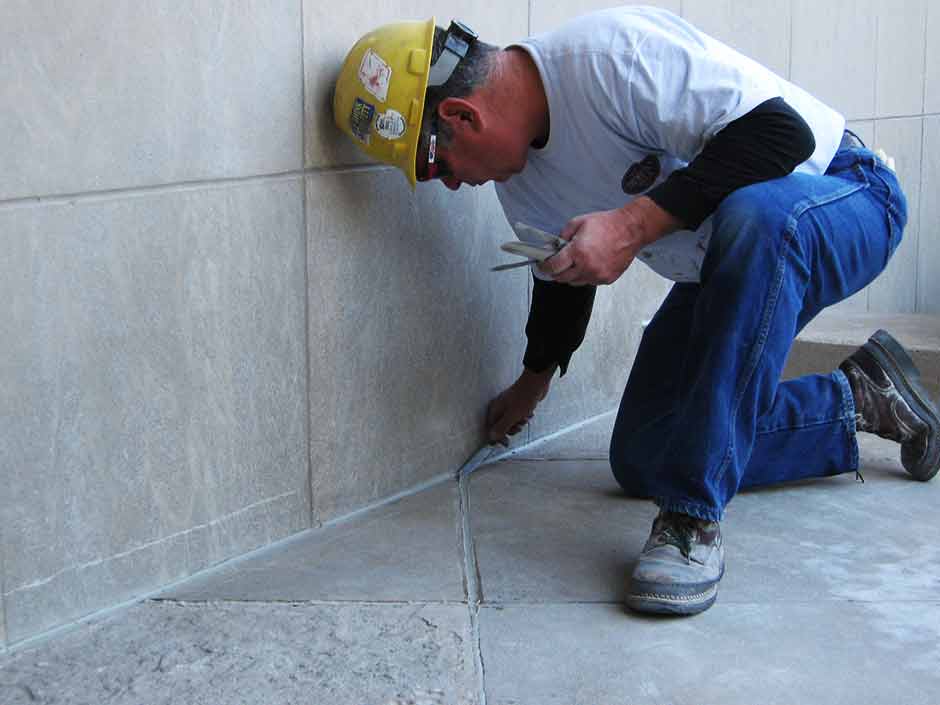
Effective commercial caulking repair requires complete removal of the old, failed sealant — not simply applying new caulk over deteriorated material. Additionally, the joint must be cleaned to bare substrate, primed if necessary, and resealed with a commercial-grade elastomeric sealant that bonds properly and accommodates ongoing building movement. Moreover, in DFW, where summer temperatures exceed 100 degrees and winter brings occasional freezing conditions, the thermal cycling that sealants must endure is extreme. Quality sealants rated for commercial application typically last 7 to 10 years, while inferior products may fail within 3 to 5 years.
Why Surface Preparation Matters Most
Consequently, property managers who attempt to extend sealant life by applying new caulk over old material achieve the opposite result — the new sealant bonds to a failing substrate and separates quickly, leaving the joint exposed again. Therefore, proper surface preparation is the most critical factor in achieving long-lasting commercial caulking performance. C and D Commercial Services provides commercial caulking and sealant replacement for masonry joints, window perimeters, expansion joints, and concrete panel connections throughout Dallas-Fort Worth.
Furthermore, our crews use professional-grade sealants from established manufacturers and follow proper surface preparation protocols that ensure long-term adhesion. For property managers seeking to prevent water intrusion and the expensive interior repairs that follow, scheduled caulking inspection and resealing is a critical component of building envelope maintenance.
Concrete and Masonry Caulking | Waterproofing Services | Concrete Repair


