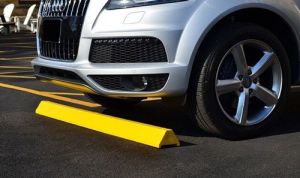
Wheel Stop Installation in Dallas & Fort Worth, TX

C & D Commercial Services is a licensed, insured wheel stop installation contractor serving the Dallas-Fort Worth metroplex since 1981. We specialize in commercial wheel stop installation, concrete parking blocks, plastic wheel stops, tire stops, parking block installation, and parking lot safety devices for retail centers, office campuses, parking garages, industrial properties, and municipal facilities throughout North Texas.
Wheel stops — also called parking blocks, parking stops, or tire stops — are a critical safety component of any commercial parking lot. They prevent vehicles from pulling too far forward into pedestrian walkways, landscaped areas, building facades, and adjacent parking spaces. Properly installed wheel stops protect pedestrians in crosswalks and sidewalks, prevent vehicle damage from contact with walls, curbs, and building structures, maintain ADA-required accessible route clearances at the front of accessible parking stalls, and prevent front-end overhang into fire lanes and no-parking zones.
C & D approaches every wheel stop installation as a site-specific safety system rather than a simple anchoring operation. We evaluate each property’s parking stall layout, traffic patterns, pedestrian circulation routes, ADA accessible stall requirements, and existing pavement conditions — then select the appropriate wheel stop material (concrete or plastic), attachment method (rebar, epoxy, or concrete anchors), and installation layout for each parking area. This systematic approach — developed over 40 years of wheel stop installation in the DFW market — ensures every parking block remains securely in place and properly positioned throughout its service life.

Video Demonstration: Parking lot surface preparation and maintenance — C & D Commercial Services provides comprehensive parking lot safety device installation including wheel stops, bollards, and speed bumps throughout Dallas-Fort Worth.

Our Competitive Wheel Stop Installation Advantage

  • Material Expertise — Concrete & Plastic Systems: We install both concrete and plastic wheel stops and recommend the optimal material for each application based on traffic conditions, climate exposure, maintenance requirements, and budget. Concrete parking blocks (72″ x 6″ x 4″, 200 lbs each) are the most economical and commonly used option for standard parking lots. Plastic wheel stops offer superior durability, color retention (dyed through the material — no paint to fade), and lighter weight for easier handling, making them ideal for parking garages, LEED-certified projects, and high-visibility applications where appearance matters.
  • Multiple Attachment Methods for Every Surface Type: Wheel stops must be securely attached to prevent movement from vehicle impact, thermal expansion, and weather exposure. C & D selects the appropriate attachment method for each installation surface: rebar hammered through pre-drilled holes and driven into the asphalt base for asphalt parking lots (asphalt is a viscous material that bonds around the rebar over time); epoxy adhesive anchors in drilled and cleaned holes for post-tensioned concrete parking garages where penetrating the slab could damage structural cables; and mechanical concrete wedge anchors for standard concrete slabs where maximum holding strength is required. Each method is selected based on the specific pavement type, structural conditions, and project requirements.
  • Integrated Parking Lot Safety Services: Wheel stop installation is most effective when coordinated with the full scope of parking lot safety and maintenance services. C & D integrates wheel stop installation with parking lot striping, bollard installation, ADA compliance upgrades, and speed bump installation — giving property managers a single vendor and coordinated scheduling for all parking lot safety improvements.

Commercial Properties We Serve

At C & D Commercial Services, our wheel stop installation and parking block installation services help DFW businesses, property managers, municipal facilities, and commercial real estate assets maintain safe, organized parking facilities that protect pedestrians, vehicles, and structures.
Missing or damaged wheel stops aren’t just a convenience issue — they create vehicle overhang into pedestrian walkways, allow parking encroachment into accessible routes, increase the risk of vehicle contact with building structures, and expose property owners to liability in pedestrian-injury incidents. Our team eliminates these risks with professional wheel stop installation executed to commercial standards.

  • Retail & Shopping Centers
  • Corporate Office Campuses
  • Parking Garages & Structures
  • Restaurant & Hospitality Properties
  • Medical & Healthcare Facilities
  • Industrial & Warehouse Properties
  • Multi-Family Apartment Complexes
  • Municipal & Government Buildings

Concrete Parking Block Installation Services

Concrete wheel stops — also called concrete parking blocks or concrete tire stops — are the most commonly installed wheel stop type on commercial properties throughout Dallas-Fort Worth. Standard concrete parking blocks measure 72 inches long, 6 inches wide, and 4 inches high, weighing approximately 200 pounds each — heavy enough to resist movement from normal vehicle contact when properly attached. They are typically reinforced with two steel rebar sections running longitudinally through the block to prevent cracking from vehicle impact.
C & D installs concrete wheel stops on both asphalt and concrete surfaces using the appropriate attachment method for each pavement type. On asphalt parking lots, we install wheel stops by hammering 12–18 inch lengths of #4 rebar through pre-drilled holes in the wheel stop and driving them into the asphalt base. Asphalt is a viscous, self-healing material that bonds around the rebar over time, creating a secure mechanical connection that prevents lateral movement. On concrete slabs and parking garage decks, we use mechanical wedge anchors or epoxy adhesive anchors depending on the structural requirements of the slab.
Concrete wheel stops can be painted for enhanced visibility — typically yellow or white reflective paint applied after installation. Painted wheel stops require repainting every 1 to 3 years depending on traffic exposure and weather conditions. For properties that want the economy of concrete wheel stops without the ongoing maintenance cost of painting, C & D can install concrete parking blocks with reflective tape or reflective paint beads mixed into the final coat for extended visibility.
If you need to purchase concrete wheel stops separately from installation, they are available through our sister company Southwest Scaffolding. Our standard concrete parking blocks are hexagonal shape, 72 inches long, with two embedded rebar sections, weighing 200 pounds each. Purchase concrete wheel stops here.

Heavy-duty concrete wheel stops installed in a commercial parking lot in Dallas, TX, providing robust vehicle restraint and parking organization.

Plastic Parking Block & Recycled Material Installation

Plastic wheel stops offer significant advantages over concrete in specific commercial applications — particularly where appearance, durability, and maintenance costs are primary considerations. Unlike concrete, plastic wheel stops are manufactured with color pigment dyed through the entire material, meaning the color will not wear off, fade, or require repainting over the life of the product. They are also significantly lighter — typically 25–40 pounds versus 200 pounds for concrete — reducing shipping costs and allowing faster installation.
Plastic wheel stops are manufactured from either virgin HDPE (high-density polyethylene) or recycled plastic materials. Recycled plastic wheel stops are a popular choice for properties pursuing LEED certification, as they contribute to MR Credit 4 (Recycled Content) and can contribute to EA Credit 1 (Optimize Energy Performance) through reduced transportation energy. Both virgin and recycled plastic wheel stops offer superior impact resistance compared to concrete — they flex under vehicle contact rather than cracking — and resist UV degradation, chemical exposure from vehicle fluids, and moisture absorption.
C & D installs plastic wheel stops using mechanical concrete wedge anchors on concrete surfaces — the same anchor specification used for heavy industrial equipment mounting. On asphalt surfaces, we install plastic wheel stops using either long epoxy-set anchors or rebar pins, depending on the asphalt thickness and base condition. Plastic wheel stops from manufacturers like Barco Products are available in multiple standard colors including yellow, white, blue, and safety yellow, with reflective inserts available for enhanced nighttime visibility.
For properties with post-tensioned concrete parking garages, plastic wheel stops installed with epoxy anchors are the recommended approach — eliminating the risk of drilling into post-tension cables while providing secure attachment that resists vehicle impact movement.

Durable plastic wheel stop installed in a commercial parking lot in Dallas, TX, ensuring vehicle safety and organized parking.

Speed Bumps, Bollards & Comprehensive Parking Lot Safety

Wheel stops are one component of a complete parking lot safety system that should also include speed bumps, bollards, and proper signage to protect pedestrians, vehicles, and structures. C & D provides comprehensive parking lot safety device installation services that integrate with wheel stop installation for properties requiring a complete safety upgrade.
Speed bump installation is one of the most effective traffic calming measures for commercial parking lots. Speed bumps force vehicles to slow to 5–10 mph in high-pedestrian areas — including crosswalks, parking garage entrances, drive-through lanes, and pedestrian plazas — dramatically reducing the risk of pedestrian-vehicle collisions. C & D installs asphalt speed bumps, modular rubber speed bumps, and speed humps (longer, gentler profile for emergency vehicle access routes) depending on the specific traffic conditions and vehicle types using the lot.
Bollard installation provides vehicle impact protection for building corners, storefronts, mechanical equipment, gas meters, fire hydrants, outdoor seating areas, and pedestrian pathways. C & D installs fixed steel bollards (filled with concrete for maximum impact resistance), removable bollards for access-controlled areas, flexible bollards for visual traffic delineation, and decorative bollards that match the property’s architectural style.
For properties requiring complete parking lot safety improvements, C & D offers combined wheel stop installation, speed bump installation, bollard installation, parking lot sign installation, and parking lot striping — all coordinated through a single vendor with unified scheduling and consistent quality standards.

Heavy-duty concrete wheel stops installed in a commercial parking lot in Dallas, TX, providing robust vehicle restraint and parking organization.

Our Competitive Difference Metrics

Why Property Managers Choose C&D for Wheel Stop Installation

Many local parking lot maintenance contractors treat wheel stop installation as an afterthought — using undersized concrete blocks, insufficient rebar lengths, improper epoxy for the surface temperature, or anchor types that fail under the first vehicle impact. The result is wheel stops that crack, shift out of position, or detach entirely within the first year of installation.
At C & D Commercial Services, we select the correct material and attachment method for each specific installation surface — rebar in asphalt, epoxy anchors in post-tensioned concrete, mechanical anchors in standard concrete. Every wheel stop is installed at the correct distance from the curb, wall, or sidewalk (typically 36–48 inches from the forward obstruction), aligned with the parking stall striping, and secured with the appropriate number of attachment points. That’s how we’ve installed and maintained parking lot safety devices across North Texas for over 40 years under the same ownership.

DFW Metroplex Coverage
Concrete & Plastic Wheel Stop Installation
Rebar, Epoxy & Anchor Mounting

Wheel Stop Installation by County & City

We provide wheel stop installation throughout the entire Dallas-Fort Worth metroplex. Our licensed crews operate active daily service routes across commercial corridors, retail centers, office parks, and industrial districts throughout North Texas:

FAQs on Wheel Stop Installation & Parking Blocks

What is the difference between concrete and plastic wheel stops?

Concrete wheel stops (concrete parking blocks) are the most economical and commonly used option for commercial parking lots. Standard concrete wheel stops are 72 inches long, 6 inches wide, 4 inches high, weigh approximately 200 pounds, and are reinforced with two steel rebar sections. They are attached to asphalt with rebar pins and to concrete with mechanical anchors or epoxy. The primary disadvantages are weight (requiring equipment for handling), susceptibility to cracking from repeated vehicle impact, and the need for periodic repainting to maintain visibility.
Plastic wheel stops are manufactured from HDPE or recycled plastic materials, weigh 25–40 pounds (significantly lighter than concrete), and are colored with pigment dyed through the material — eliminating the need for painting. Plastic wheel stops offer superior impact resistance (they flex rather than crack), resist UV degradation and chemical exposure, and are available in multiple standard colors with optional reflective inserts. They are more expensive than concrete wheel stops but offer lower lifetime maintenance costs, particularly in high-visibility applications where appearance matters.
C & D installs both concrete and plastic wheel stops and recommends the optimal material based on the specific property requirements, traffic conditions, and budget considerations.

How are wheel stops attached to different parking lot surfaces?

The attachment method for wheel stop installation depends on the parking lot surface type:
Asphalt parking lots: Rebar pins (12–18 inch lengths of #4 rebar) are driven through pre-drilled holes in the wheel stop and hammered into the asphalt base. Asphalt is a viscous, self-healing material that bonds around the rebar over time, creating a secure mechanical connection that prevents lateral movement from vehicle contact.
Standard concrete slabs: Mechanical wedge anchors are installed in holes drilled through the wheel stop and into the concrete slab. Wedge anchors provide the highest holding strength of any attachment method and are the preferred approach for concrete surfaces where slab penetration is structurally acceptable.
Post-tensioned concrete parking garages: Epoxy adhesive anchors are installed in drilled and cleaned holes — without penetrating the slab depth where post-tension cables are located. Epoxy anchors provide adequate holding strength for wheel stops while eliminating the risk of damaging the structural post-tension cables that would compromise the garage’s structural integrity.

How far should wheel stops be placed from walls, curbs, and sidewalks?

The standard wheel stop placement distance from the forward obstruction — whether a wall, curb, building face, sidewalk, or landscape edge — is 36 to 48 inches. This distance allows the front of a standard passenger vehicle to contact the wheel stop before the vehicle’s front bumper reaches the obstruction, while also providing adequate space for pedestrian passage in front of the vehicle.
For accessible parking stalls, ADA Standards for Accessible Design (2010) require that wheel stops (if installed at accessible stalls) be placed to allow the required access aisle width and vehicle pull-through clearance. In practice, wheel stops are often omitted at accessible stalls or placed at the back of the stall rather than the front to avoid interfering with accessible route clearances.
C & D determines the correct wheel stop placement distance for each parking area based on the specific vehicle types expected, the distance to the forward obstruction, pedestrian circulation patterns, and ADA requirements.

How many wheel stops are needed per parking stall?

Standard parking stalls typically require two wheel stops per stall — one positioned at approximately 1/3 and 2/3 of the stall width — to contact both front tires of a parked vehicle. This configuration ensures the vehicle is stopped evenly and prevents the driver from pulling past one wheel stop while the other tire misses it.
For angled parking stalls (typically 45 to 75 degrees), wheel stops are positioned to contact the front tires when the vehicle is properly aligned with the stall. The specific placement varies with the angle: shallower angles require wheel stops placed closer to the stall’s forward edge, while steeper angles allow placement farther back.
For compact car stalls, handicap accessible stalls, and parallel parking spaces, wheel stop placement may be adjusted or omitted entirely depending on the specific configuration and ADA requirements. C & D evaluates each parking area and determines the correct number and placement of wheel stops for each configuration.

Can wheel stops be installed over existing asphalt or concrete without removal of old stops?

Yes — in most cases, old damaged wheel stops are removed and new ones installed in the same location. C & D removes existing broken, cracked, or displaced wheel stops, extracts the old rebar or anchors, and patches the remaining holes before installing new wheel stops in the correct position.
However, there are situations where new wheel stop installation can proceed over existing asphalt or concrete without full removal: if a property needs additional wheel stops in areas where none currently exist (new installation only, no removal required); if existing concrete wheel stops are still in good condition but need re-anchoring or repositioning (the existing blocks are reused); or if plastic wheel stops are being installed over an existing flat surface where no anchor holes have been previously drilled.
C & D offers complimentary parking lot evaluations to assess existing wheel stop conditions and provide recommendations for repair, replacement, or new installation.

Do you provide wheel stop installation in Plano, Addison, and other DFW cities?

Yes. C & D provides wheel stop installation throughout the entire Dallas-Fort Worth metroplex, including Dallas, Fort Worth, Arlington, Plano, Garland, Irving, Frisco, McKinney, Richardson, Grand Prairie, Mesquite, Carrollton, Lewisville, Denton, Flower Mound, Allen, Rockwall, Rowlett, Grapevine, Southlake, Keller, Coppell, Plano, and all surrounding communities. Our parking lot safety device crews operate active daily installation routes across every major commercial corridor in North Texas. Contact us for a free wheel stop installation quote.

Request a Wheel Stop Installation Proposal

Ready to install wheel stops or other parking lot safety devices on your commercial property? Use the secure submission form below to request a detailed, prompt quote. Provide your basic facility information and our commercial crew will compile a customized wheel stop installation assessment mapped to your property’s specific conditions and safety requirements.

    Detailed DFW Neighborhood Service Footprint

    For micro-targeted service optimization, we track localized route dispatch matrices down to specific sub-developments and business corridors across North Texas. Explore our structural community coverage zones below:

    • Dallas County Neighborhood Service Footprint

      Dallas Communities: Greenway Park, Park Cities, Inwood-Northwest, Kimball, Koreatown/Gribble, Laurel Land Memorial Park, McCommas Bluff, Medical District, Mountain View, Oak Park Estates, Oak Park Gardens, Oak Park Villas, Parkside at Trinity Green, Peacock Terrace, Prairie Creek, Prestonwood, Singing Hills, Sparkman Club Estates, Stevens Park, Swiss Avenue Crossing, Teagarden Estates, Tinley Park, Travis Ranch, Trinity Bluff, University Park, University Place, Uptown Dallas, Verbena, Vickery, White Rock Hills, White Rock Lake, Wolf Creek.
      Downtown Dallas Corridors: Arts District, Baylor District, Capella Park, Civic Center District, Dallas Arts District, Dallas Farmers Market District, Main Street District, Reunion District, Riverfront District, South Side, Thanksgiving Commercial Center, The Cedars, Uptown, Victory Park, West End Historic District.
      East Dallas Communities: Alger Park/Ash Creek, Belmont, Buckner Terrace/Everglade Park, Caruth Terrace, Casa Linda, Casa Linda Estates, Casa Linda Park, Casa View, Casa View Haven, Claremont, Claremont Park, Eastwood, Edgemont Park, Forest Hills, Gaston Park, Greenland Hills, Hillridge, Hollywood Heights, Hollywood/Santa Monica, Junius Heights, Lake Park Estates, Lakewood, Lakewood Heights, Lakewood Trails, Little Forest Hills, Lochwood, Lower Greenville, M Streets, North Stonewall Terrace, Old Lake Highlands, Ridgewood Park, Santa Monica, Stonewall Terrace, University Meadows, Vickery Place, White Rock, Wilshire Heights, Baylor/Meadows, Belmont Park, Bryan Place, Deep Ellum, Munger Place Historic District, Peak’s Suburban Addition, Swiss Avenue.
      Northeast Dallas Communities: Abrams Place, Alexander’s Village, Boundbrook Oaks Estates, Chimney Hill, Countryfield Community, Country Forest, Forest Highlands, Glen Oaks, Hamilton Park, High Oaks Addition, Highland Meadows, Highlands West, Jackson Meadow, L Streets, Lake Highlands, Lake Highlands Estates, Lake Highlands North, Lake Highlands Square, Lake Ridge Estates, Merriman Park Estates, Merriman Park North, Moss Farm, Moss Meadows, Northwood Heights, Oak Highlands, Oak Tree Village, Pebble Creek, Richland Park Estates, Rolling Trails, Royal Highlands, Royal Highlands Village, Royal Lane Village, Stultz Road, Town Creek, University Manor, University Terrace, Urban Reserve, Walnut Creek Estates, Whispering Hills, White Rock Valley, Woodbridge, Woodlands on the Creek.
      North & Northwest Dallas Communities: Bluffview, Caruth Hills, Churchill Way, Dallas Midtown, Devonshire, Elm Thicket, Greenway Parks, Preston Center, Preston Hollow, Vickery Meadows, Bent Tree, Melshire Estates, Northwood Hills, Platinum Corridor, Preston Highlands, Timberglen, Arlington Park, Asian Trade District, Bachman, Cypress Waters, Design District, Disney Streets, Love Field, Midway Hollow, Shannon Estates, Stemmons Corridor.
      South Dallas Communities: Cedar Crest, Glenview, Skyline Heights, Arnold’s Station, Buckner Park, Cedar Run, El Barrio (Little Mexico), Elam, Fireside, Kleberg, Kleburg, Lake June, Parkdale, Pemberton Hill, Piedmont, Pleasant Grove, Pleasant Hills, Pleasant Mound, Riverway Estates/Bruton Terrace, Rylie, Scyene, Seagoville/Dallas, Spruce Square, Urbandale, Woodland Springs, Bonton, Dixon Circle, Highland Hills, Alta Park, Dolphin Heights, Edgewood, Exposition Park, Fair Park, Jubilee Park, Magnolia Park, Mill City, Monterey Gardens, Owenwood, South Boulevard/Park Row, Wheatley Place, Kiest Park.
      West Dallas Communities: Eagle Ford, Greenleaf Village, La Bajada, La L’aceate, La Loma, Lake West, Ledbetter Gardens, Ledbetter Hills, Los Altos, Muncie, Trinity Grove, Western Heights, Westmoreland Heights.
      Oak Cliff & Oak Lawn Sectors: Kessler, Bishop Arts District, East Kessler Park, Kessler Highlands, Kessler Park, Kessler Plaza, Kessler Square, Kidd Springs, Kings Highway Conservation District, L.O. Daniel, Stevens Park Estates, Stevens Park Village, West Kessler, Winnetka Heights, Arcadia Park, Beckley Club Estates, Elmwood, Lake Cliff, Tenth Street Freedman’s Town, Wynnewood, Cityplace, International Center, Knox Park, Knox/Henderson, LoMac, Perry Heights, State Thomas, Turtle Creek, West Village.
      Additional Dallas County Enclaves: University Park, Farmers Branch, Carrollton, Grand Prairie, Addison, Seagoville, DeSoto, Garland, Coppell, Balch Springs, Wilmer.

    • Tarrant County Neighborhood Service Footprint

      Fort Worth Sub-Sectors: Alamo Heights, Arcadia Park Estates, Arlington Heights, Arlington Heights West, Bellaire, Benbrook, Berkeley Place, Berry Street, Blue Mound, Bluebonnet, Bluebonnet Hills, Bomber Heights, Bonnie Brae, Brentmoor, Brentwood-Oak Hills, Brookside, Burchill, Butler, Camelot, Camp Bowie West, Candleridge, Carter Riverside, Carver Heights East, Castleberry, Central Meadowbrook, Chapel Creek, Chase Oaks, Chisholm Ridge, College Hill, Colonial, Como, Cooke’s Meadow, Coventry, Crawford Farms, Creekwood, Crestline, Crestview, Crestwood, Cultural District, Diamond Hill, Diamond Hill-Jarvis, Downtown Fort Worth, East Fort Worth, Eastchase, Eastern Hills, Eastland, Eastwood, Echo Heights, Echo Hills, Ederville, Edgecliff Village, Fairmount, Fairmount-Southside Historic District, Fairview, Far Southwest Fort Worth, Forest Hill, Forest Park, Fossil Creek, Fossil Park, Garden Acres, Gateway Park, Glancrest, Glen Garden, Glencrest, Golden Triangle, Greenbriar, Hallmark, Hallmark Camelot, Hallmark-Cloverhill, Handley, Harriet Creek Ranch, Harvest Ridge, Heritage, Hidden Lakes, Highland Hills, Highpoint, Hilltop, Hillwood, Historic Carver Heights, Historic Rosedale Park, Historic Southside, Historic Stop Six, Hulen Bend, Hulen Heights, John T White, Keller Springs, Lake Country, Lake Crest, Lake Worth, Lasater, Linwood, Live Oak Creek, Loma Linda, Lost Creek Ranch, Marine Creek, Markum Ranch, Masonic, Meadow Ridge, Meadowbrook, Meadowbrook Estates, Meadowcreek, Medical District, Melody Hills, Mira Vista, Mistletoe Heights, Mitchell Boulevard, Monticello, Montserrat, Morningside, Morningside Park, Near East Side, North Beach, North Benbrook, North Fort Worth, North Hi Mount, North Riverside, Northbrook, Northgate, Northpark, Northside, Oakhurst, Oakridge, Oakwood, Oakwood Terrace, Overton Park, Overton South, Overton West, Overton Woods, Park Glen, Park Hill, Park Hill Estates, Parker Essex Boaz (PEB), Parks of Deer Creek, Parkside, Parkwood, Pecan Acres, Pecan Valley, Polytechnic Heights (Poly), Primrose Crossing, Quail Valley, Ramey Place, Rendon, Ridgeview, Ridglea, Ridglea Hills, Ridglea North, Ridglea West, Ridgmar, River District, River Oaks, River Trails, Riverbend, Rivercrest, Riverside, Riverstone, Rock Island, Rolling Hills, Rosedale, Rosemont, Ryan Place, Ryanwood, Sagamore Hill, Saginaw, Saginaw Hills, Sansom Park, Santa Fe Enclave, Scenic Bluff, Seminary Hill, Sendera Ranch, Shady Acres, Silver Saddle, Six Points, Smith Barry, South Hills, South Lake Worth, South Meadows, South Poly, Southland Terrace, Southridge, Southside, Southwest Fort Worth, Springdale, Stockyards, Stone Creek, Stonegate, Stonewood/Stone Creek, Stonybrook, Stop Six, Stop Six Sunrise Edition, Summer Creek, Summerfields, Sun Valley, Sundance Square, Sunset Terrace, Sycamore, Sylvan Heights West, Talavera, Tanglewood, Tarrant, TCU/West Cliff, The Bar Ranch, The Ranches, The Summit, The Village, Timberland, Trinity Bluff, United Riverside, University Place, University West, Uptown Fort Worth, Villa de León, Watersbend, Wedgwood, Wedgwood Central, Wedgwood East, Wedgwood Middle, Wedgwood South, Wedgwood Square, Wedgwood West, West 7th, West Byers, West Meadowbrook, Westcliff, Western Hills East, Western Hills North, Western Hills Northeast, Western Hills Northwest, Western Hills South, Westland, Westover Hills, Westside, Westworth Park, Westworth Village, White Lake Hills, Willow Creek, Woodhaven, Woodhaven Village, Woodland Springs, Woodridge, Worth Heights.
      Additional Tarrant County Sectors: Arlington, Keller, North Richland Hills, Kennedale, Euless, Hurst, Bedford, Colleyville, Mansfield, Watauga, Blue Mound, Edgecliff Village, Westover Hills, Westworth Village.

    • Collin, Rockwall, Denton & Surrounding Service Footprint

      The Colony Sub-Sectors: Austin Ranch, Camey, Castle Hills, Castle Hills – Golf Villas / Castle Hills Golf Course, Castle Hills South, Custer Creek, Eagle Point, Grandscape, Heritage Lakes, Lakeside, North Colony, Old Town, Pinnacle Club, Plano Pkwy / Destination Dr, South Colony, St. Andrews, The Cascades, The Colony Heights, The Colony South, The Colony Southeast, The Colony Southwest, The Tribute, Waterstone, Wyndale Meadows.
      Plano Sub-Sectors: Arbor Creek, Arbor Hills, Arbor Vista, Audubon Place, Avignon, Beverly Hills Estates, Biltmore, Bradford Estates, Briar Meadow, Briarmeade, Briarwood, Briarwood Estates, Bristol Pointe Estates, Bunker Hill Estates, Bunker Hill View, Cambridge Place at Russell Creek, Carriage Hill, Castlemere, Central Park on Preston, Chapel Hill, Chase Oaks, Cliffs of Gleneagles, Cloisters, Commodore at Preston, Country Creek, Country Place, Courtyard Estates, Courtyards at Russell Creek, Coventry, Covington Square, Creekbend Estates, Creeks of Timber Brook, Creeks of Willow Bend, Creekside, Creekside at Preston, Creekside Estates, Crestwood, Cross Creek, Crystal Creek, Custer Creek Estates, Custer Hill, Cypress Creek Estates, Cypress Point, Cyprus Villas, Deerfield, Denham Village, El Ranchero Estates, Enclave at Willow Bend, Estates at Wooded Cove, Fairfax Hill, Fairfax Meadows, Fairfield of Plano, Fairway Estates, Fairways of Gleneagles, Fairways of Ridgeview, Forest Creek Estates, Forest Creek North, Fountain Creek, Fountain Ridge, Glen Heather, Glen Lyon, Glen Meadows, Gleneagles, Glenhollow, Grand Estates of Breckinridge, Greens of Gleneagles, Greenway Court, Haggard Estates, Haggard Farms, Harrington Homeplace, Harrington Mills, Harvard Villas, Harvestwood, Haversham, Heather Glen, Heritage Creekside, Heritage Ridge, Hickory Ridge, High Place, Highland Meadows, Highland Ridge, Highlands North, Highlands of Preston Ridge, Highlands of Russell Park, Hillcrest, Hills of Prestonwood, Hills of Spring Creek, Hudson Heights, Hunters Creek Estates, Hunters Glen, Hunters Landing, Hunters Ridge, Huntingdon Green, Huntington Park, Icon at Legacy West, Independence Hill, Independence Square, Indian Creek, Kathryn Park, Kemper Estates, Kensington, Kimberlea, Kings Court of Willow Bend, Kings Gate, Kings Ridge, Kingsborough In Old Shepard Place, Kingswood, Knolls at Russell Creek, Lakes of La Cima, Lakeside at Preston, Lakeside on Preston, Legacy Hills, Legacy Park, Legacy Park Estates, Legacy Town Center, Liberty Park, Los Rios, Malibu Estates, Merriman Estates, Midway Park, Normandy Estates, North Creek, North Texas, Northglen, Northridge Estates, Northwood, Oak Creek Estates, Oak Point, Oak Point Estates, Oak Ridge, Oakwood Estates, Oakwood Glen, Oakwood Hills, Old Shepard Place, Orleans Park, Park Creek, Park Forest, Park Ridge, Parkbrooke, Parkside, Parkside Ridge, Parkway Estates, Parkway Heights, Pasquinellis Westbrook, Pasquinellis Willow Crest, Pebble Brook at Willow Bend, Pecan Hollow, Pitman Creek Estates, Pitman Creek North, Plano East, Pointe West, Prairie Commons, Prairie Creek, Prairie Creek Estates, Preston Bend, Preston Cove, Preston Creek, Preston Crest, Preston Green, Preston Hill, Preston Hollow, Preston Lakes, Preston Meadows North, Preston Oak, Preston Springs, Preston View, Preston Village, Prestonwood, Prestonwood Creek, Quail Creek, Quincy Place, Ravenglass Estates, Red Wolf Estates, Reflections Of Old Shepard Place, Regency Park, Rice Field at Plano Arts, Ridgeview Park, Ridgeview Ranch, Ridgeview Villas, Rockcreek Place, Rolling Hills, Russell Creek, Sabine Park Estates, Shepards Glen, Shiloh Ranch, Shoal Creek, Southridge, Spring Bend, Spring Creek, Spring Creek Parkway, Spring Ridge, St Andrews, Steeplechase, Stone Creek, Stone Lake Estates, Stonebridge Ranch, Stonehaven Place, Stonetree, Stonewood Glen, Stoney Hollow, Summit Park, Turnberry Village, Village at Legacy, Waters Edge, Wellington, West Creek Estates, Westgate, Westover Estates, Whiffletree, Whispering Willows Estates, White Rock Creek Estates, Williamsburg Square, Willow Bend, Willow Bend Country Club, Willow Bend Lakes, Willow Creek, Windford Ridge, Windhaven, Windhaven Farm, Windhaven Park, Windsor Park, Windy Hill, Wolf Creek Estates, Woodburn Estates, Woodlands of Plano, Woods at Russell Creek, Woods of Suncreek, Wyndemere, Wyndham Hill, Wyndsor.
      Flower Mound Sub-Sectors: Arborwood, Bakers Branch, Bella Lago, Bella Strada, Belle Creek Village, Belmont At Bridlewood, Bentley Woods, Bolo Point, Bradford Park, Brandywine At Wellington, Bridlewood, Bridlewood Farms, Brookstone, Bryn Mar Estates, Candlebrook Estates, Canterbury Row, Canyon Falls, Carriage Glen At Bridlewood, Castle Hills, Cedar Bluff, Chateau Du Lac, Chaucer Estates, Chimney Rock, Churchill Crossing, Country Meadow, Countryside Estates, Coventry At Bridlewood, Creek Wood, Creekside At Cross Timbers, Creekside at Heritage Park, Diamond Belle, Dominion Estates, Edgewood, Emerald Bay, Estancia Estates, Estates At Creekwood, Estates at Tour 18, Estates Of Flower Mound, Estates Of Park Place, Fallbrook, Flower Mound Oaks, Flower Mound Village, Flower Mound Woods, Forest Park Estates, Forest Vista, Foxborough Hollow, Franklin Hills, Glenwick Estates, Grace Park, Grand Park Estates, Hawthorne Estates, Hearthstone At Firewheel, Heritage West, Hidden Oaks At Lake Forest, Hidden Valley Country, Highland Court, Highland Oaks, Highland Shores, Hillcrest At Wellington, Hillside of Flower Mound, Hilltop Estates, Hunters Glen, Immel Estates, Immel Estates Addition, Kensington Estate, Kensington Park Estates, Ladera, Lake Bluff, Lake Forest, Lake Shore, Lakemont, Lakemont Addition, Lakeshore Terrace, Lakeside, Lakeside Crossing, Lakeside DFW, Lakeside Tower, Lakeview Estates, Lakewood, Legends, Lexington Downs At Bridlewood, Lexington Glen, Magnolia Park, McKamy Creek, Meadows At Cross Timbers, Montalcino Estates, Morrison Farms, Oak Bend Estates, Oak Park, Oakbridge, Oakbridge at Flower Mound, Oaks Of Lake Forest, Oaks of Shadow Ridge, Oakwood Estates, Old Town Flower Mound, Orchard Flower, Parkmont Place, Parkside At Woodlake, Pecan Acres, Pecan Meadows, Pecan Park, Peninsula At Twin Coves, Pepper Creek Ranch, Pinewood Hills, Pinnacle At Riverwalk, Point Noble, River Oaks, Rustic Timbers, Saddle Oaks, Saddlewood, Sanctuary, Stafford Estates, Stone Creek Addition, Stone Hill Farms, Sunset Point at Twin Coves, Terracina, The Forums, The Landing, The Legends, The Oaks of Shadow Ridge, The Peninsula at Twin Coves, The Preserve at Flower Mound, The River Walk at Central Park, The Sanctuary, The Villages of Northshore, The Vineyards, Timarron, Timber Creek Park, Tinley Park, Tour 18, Town Lake at Flower Mound, Towne View Estates, Trailwood, Triple T Farms, Valley Creek, Vickery, Vilamoura, Village At Lake Bluff, Villages Of Cross Timbers, Villages Of Northshore, Villas at Southgate, Walden Creek Estates, Waterford Park, Wellington, Whisper Creek, Wichita Chase, Wichita Creek, Williams Ranch, Willow Ridge Estate, Windsor Heights At Bridlewood, Windsor Park, Woodlake, Woods At Lake Forest, Woods At Wiley, Wright Estates.
      Frisco Sub-Sectors: Arbors at Willow Bay, Avondale, Belmont Woods, Bretton Woods, Canals at Grand Park, Chapel Creek, Cheyenne Village, Christie Ranch, Cobb Farm, Cobb Hill, Collinsbrook Farm, Creekside at Stonebriar, Crown Ridge, Cypress Creek, Diamond Point Estates, Edgestone at Legacy, Edgewood, Emerson Estates, Emory Park, Enclave At Creekwood, Estates At Rockhill, Estates at Shaddock Park, Estates On Legacy, Fairwater, Frisco Lakes, Frisco Lakes Del Webb, Frisco Springs, Glen View, Grayhawk, Griffin Parc, Heather Ridge, Heather Ridge Estates, Heritage Green, Heritage Lakes, Heritage Village, Highland Ridge, Hillcrest Estates, Hillcrest Meadows, Hills of Kingswood, Hollyhock, Hunters Creek, Knolls Of Frisco, Lake Hill Village, Lakes On Legacy, Latera, Lawler Park, Lexington, Lexington Country, Liberty Crossing, Lone Star Ranch, Majestic Gardens, Meadow Hill Estates, Miramonte, Newman Village, Northridge, Panther Creek, Panther Creek Estates, Park Place Estates, Park West, Pearson Farms, Phillips Creek Ranch, Plantation Resort, Prairie View, Preston Highlands, Preston Hills, Preston Vineyards, Quail Meadow Village, Richwoods, Saddlebrook Village, Shaddock Creek Estates, Somerset Park, Sorano, Spring View Estates, Starwood, Stonebriar, Stonebriar Country Club Estates, Stonelake Estates, The Canals at Grand Park, The Fairways, The Grove, The Landing At Waterstone, The Shores At Waterstone, The Trails of West Frisco, The Vistas At Waterstone, Trails of Frisco, Turnbridge Manor, Tuscany Meadows, Twin Creeks, Village Lakes, Villages At Willow Bay, Villages Of Creekwood, Villages of Stonelake Estates, Waterstone, Westfalls Village, Willow Pond, Winding Creek Estates, Windsor Place, Wyndsor Pointe, Wynngate, Wynnwood Haven Estates.
      Additional Northern DFW Loop Sectors: Denton, Flower Mound, Lewisville, Celina, Murphy, Prosper, Rockwall, Wylie, Rowlett, Sachse, Allen, Roanoke, Trophy Club, Fate, Forney, Terrell, Sunnyvale, Midlothian, Waxahachie, Ennis, Ovilla, Cedar Hill.

    Need Wheel Stop Installation?

    Get a custom wheel stop installation proposal mapped precisely to your commercial property’s parking lot configuration and safety requirements.

    REQUEST A QUOTE
    © Copyright 2025 C and D Commercial Services, Inc.